Website and identity
The Next.js website organizes listing and application features. Firebase identifies the signed-in person; the backend resolves their product profile and checks whether they can perform the action.
A rental marketplace that connects property listings, applications, conversations, viewings, and paid access.
The key boundary is a database commit: the application is recorded now; email and other provider work can finish later.
A renter’s expression of interest needs to reach the right landlord, open the right conversation, and leave a clear record of what happens next. A lost response or failed email should not turn that into a half-created application.
The web client sends an authenticated request to a shared application service. The service validates the current listing and saves the related product records together. External follow-up is processed after the database commit.
This view follows the core application path. PostgreSQL holds authoritative product state, Firebase supplies identity, and a separate outbox worker processes committed follow-up work. Redis supports selected entitlement reads; it is not the source of purchased access.
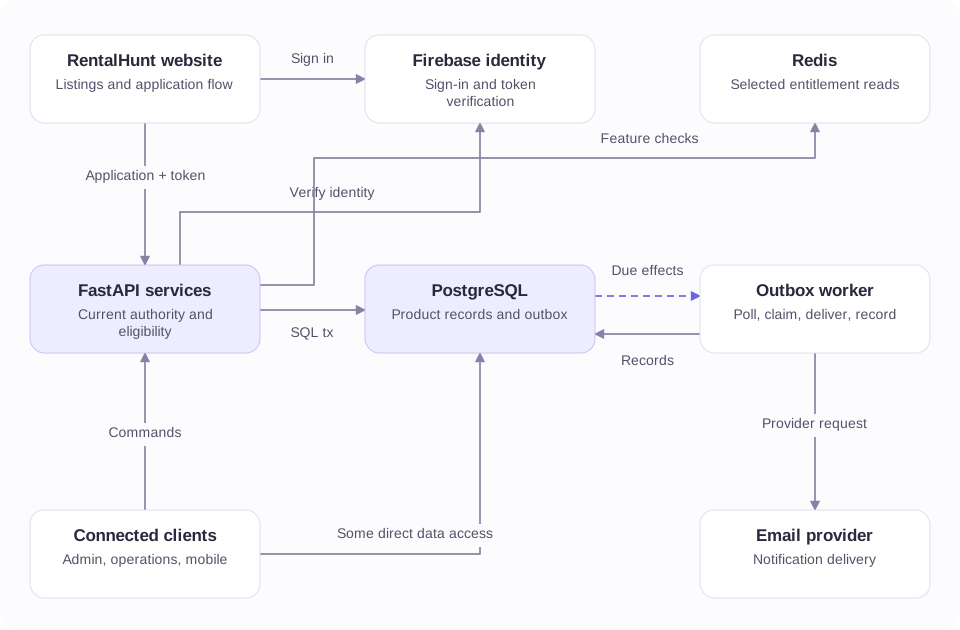
This view follows the core application path. PostgreSQL holds authoritative product state, Firebase supplies identity, and a separate outbox worker processes committed follow-up work. Redis supports selected entitlement reads; it is not the source of purchased access.
The Next.js website organizes listing and application features. Firebase identifies the signed-in person; the backend resolves their product profile and checks whether they can perform the action.
FastAPI routes delegate to a shared application primitive used by manual, quick, and automated application paths. It checks current state under database locks instead of relying on what the browser previously displayed.
The application, listing conversation, optional initial message, and follow-up intent are written within the same transaction. A tenant/listing uniqueness constraint backs up the duplicate check.
Admin, sales, marketing, and a mobile prototype belong to the same RentalHunt system. Operator tooling combines backend commands with some direct product-data access; sales and communications also maintain their own operational records. They are not separate marketplace products.
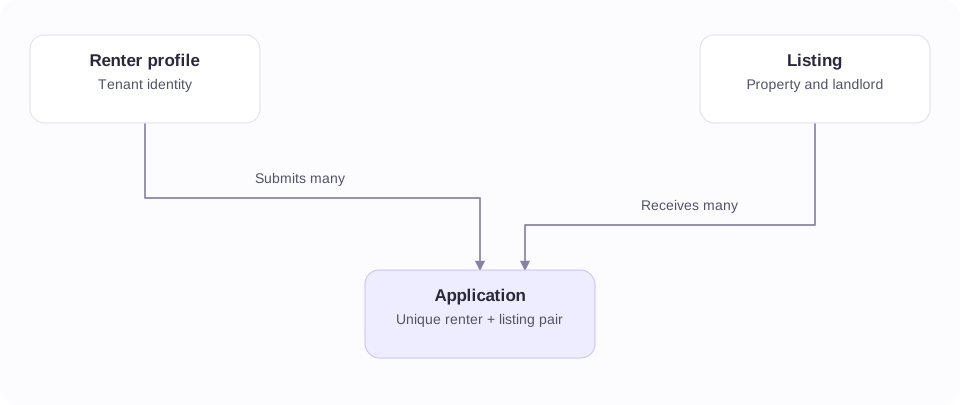
A renter profile can submit many applications, and a listing can receive many applications. The application table permits one row for each renter/listing pair. Conversations and follow-up events are coordinated by the application service.
The synchronous path confirms the application and conversation. A separate polling worker performs follow-up after commit. An optional viewing invitation depends on the listing’s current stage.
The website keeps a pending application intent and sends the listing, message, and consent alongside the current identity token. It preserves enough context to handle an uncertain response.
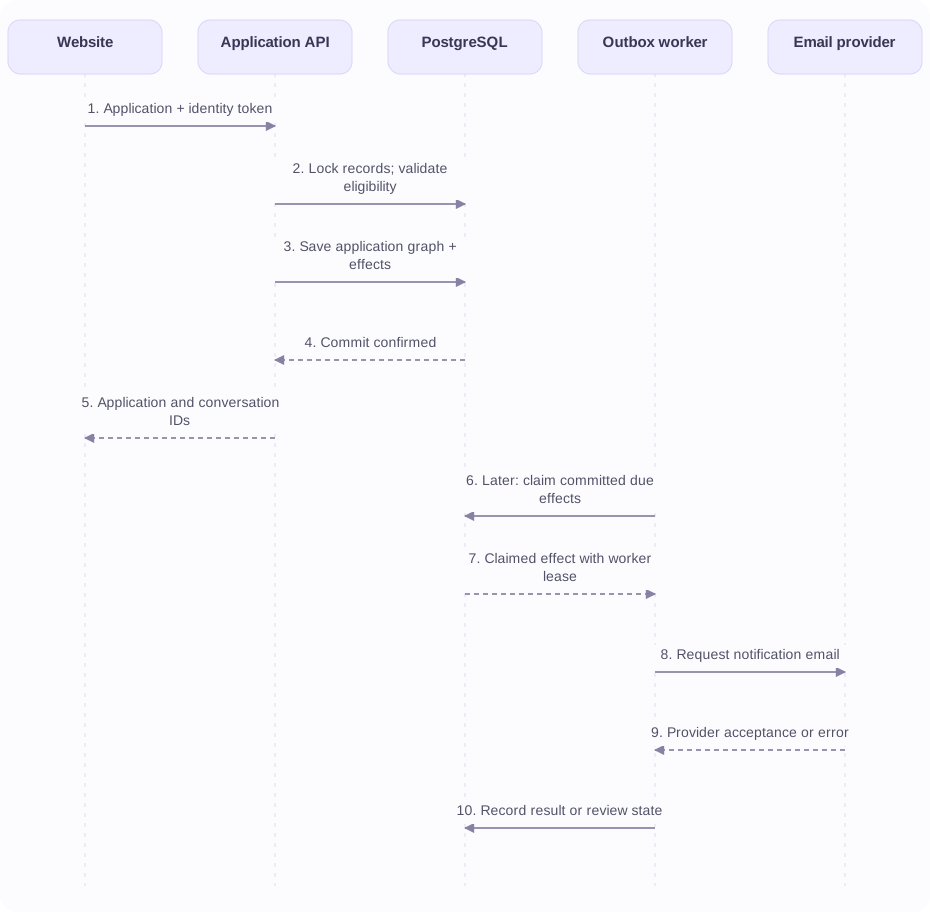
The synchronous path confirms the application and conversation. A separate polling worker performs follow-up after commit. An optional viewing invitation depends on the listing’s current stage.
What each approach enables, and the complexity it introduces.
Related product records and follow-up intent are saved through one shared transaction, with database constraints for the important uniqueness boundary.
The tradeoff The local workflow can stay consistent even when email is unavailable. Delivery becomes deferred work that needs workers, retry states, and operational visibility.
The browser reconciles application state after ambiguous responses, while checkout and provider work keep durable identities for repeated attempts.
The tradeoff The system can distinguish some retries from new work, but it needs more state transitions and a review path for outcomes it cannot prove.
Entitlement checks use scoped, expiring cache entries and support a fresh database path.
The tradeoff This can reduce repeated reads, but cache invalidation and purchase expiry still need careful handling. It does not remove the database from the access decision.
Possible next work; not implemented outcomes.
This case study describes an inspected implementation. Source code and configuration alone do not establish a current deployment or measured product results.
Save the written case study